

Timber Fencing in Epping
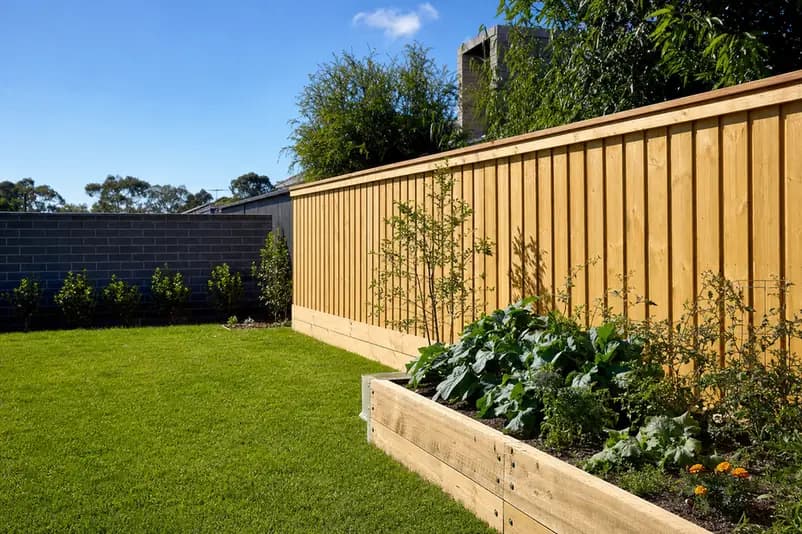
Timber paling, picket and slat fences are built by our fencing contractors in Epping, from plain boundaries to privacy screens. On estates it's often lapped and capped, where the boards overlap and a rail runs along the top.
You choose the timber and the style, and we take the old fence away.
- Choose treated pine or hardwood palings.
- We build butted, lapped, or lapped and capped fences.
- We also fit plinths, stain fences and fix old ones.
Timber fence styles we build
A paling fence is made of thin vertical boards called palings. The way they meet changes how the fence looks and how much you can see through it.

Butted palings
Each paling butts up against the next. It's the simplest style, though the timber shrinks as it dries and thin gaps appear.

Lapped palings
Every paling covers the edge of the one beside it, so the fence stays private when the timber dries and shrinks.

Lapped and capped
Lapped palings with a capping rail across the top. It's tidier and keeps rain off the board ends.

Exposed posts
The posts stay visible on one side, which some estates ask for on corner fences.

Picket fences
Low, spaced pickets for the front of an older house, painted or left natural.

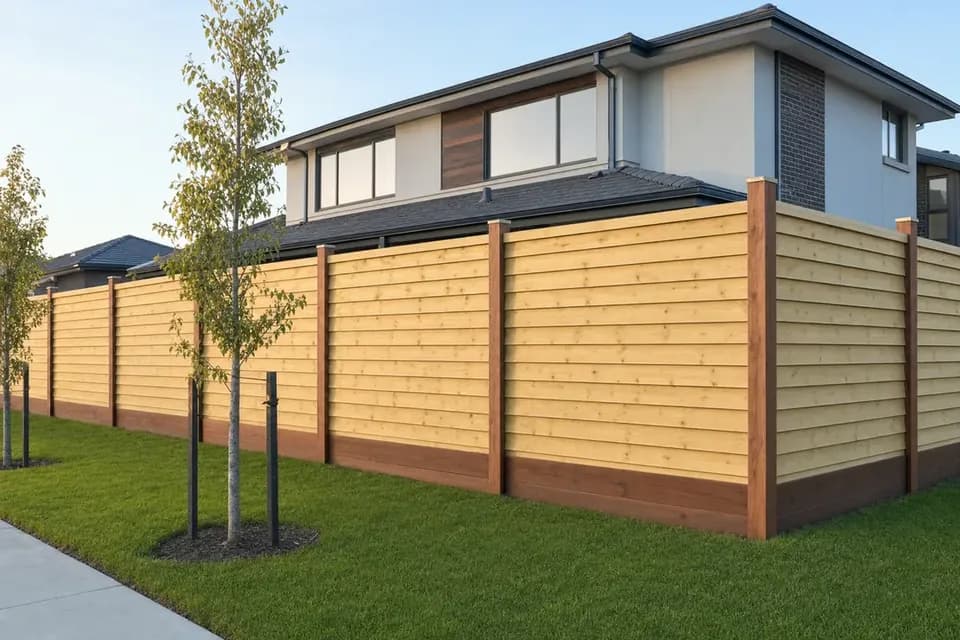
Slat screens
Horizontal slats, often merbau hardwood, for a modern front fence or a privacy screen beside a deck.
Treated pine or hardwood?
Treated pine is the usual choice for back and side fences. It's pressure-treated so rot and termites leave it alone, and it costs less than hardwood.
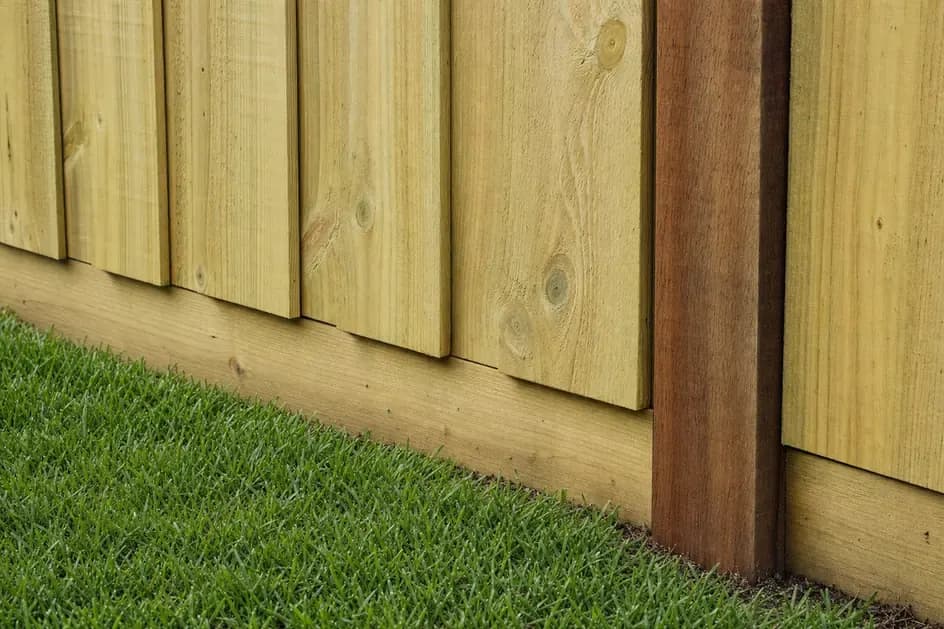
Hardwood is heavier and harder, so it's often used for posts and plinths. A plinth is a flat board fixed at ground level, so the bottom of each paling sits clear of damp soil.
Many fences use both: hardwood posts and plinth with treated pine palings.
Timber fences on new estates near Epping
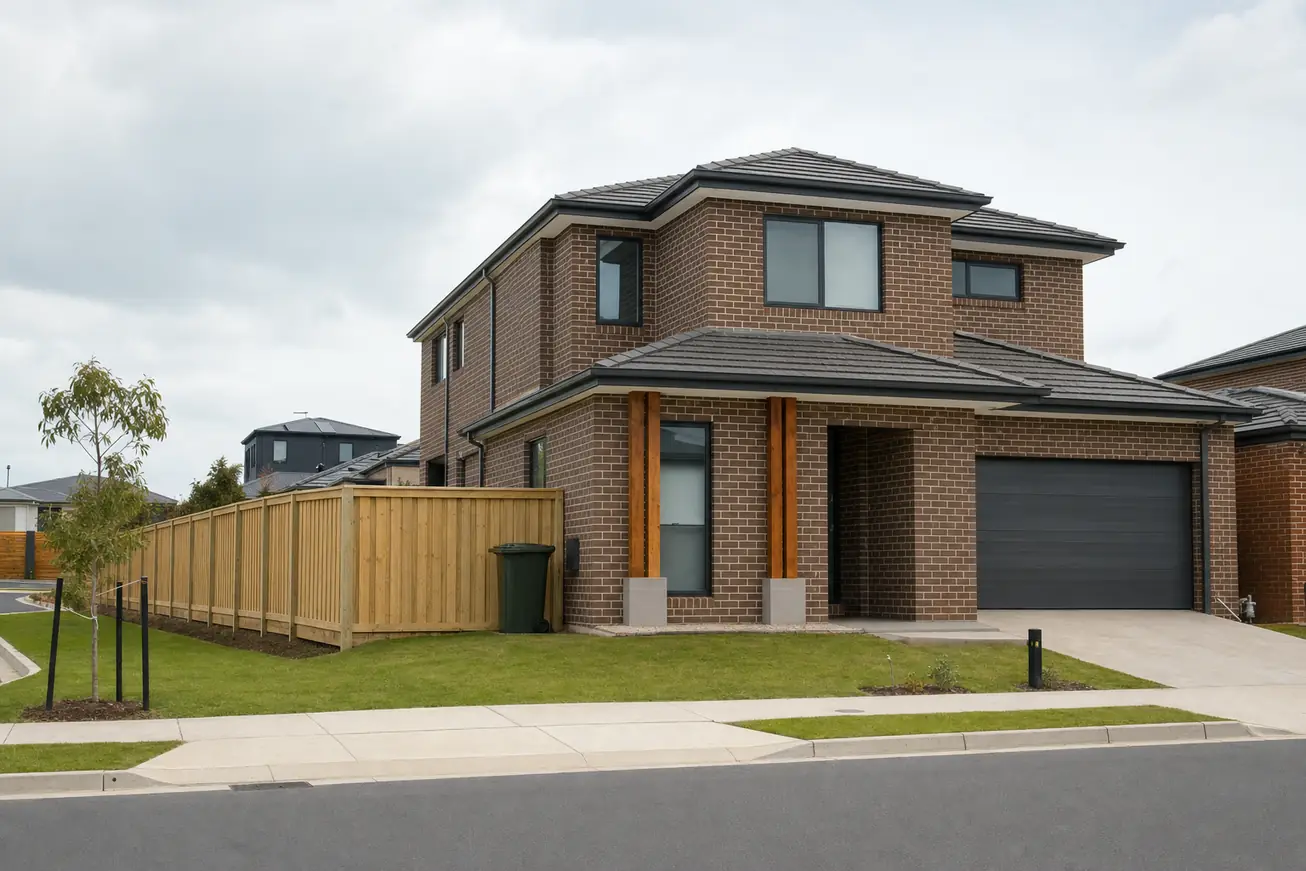
Aurora, the estate running north of Epping into Wollert, asks for timber paling side and back fences, lapped and capped, up to 1.8 metres. Its guidelines show hardwood posts, a timber plinth and a capping rail.
Put your estate name in the quote form, and we'll build the fence its guidelines show.
How we build a timber fence
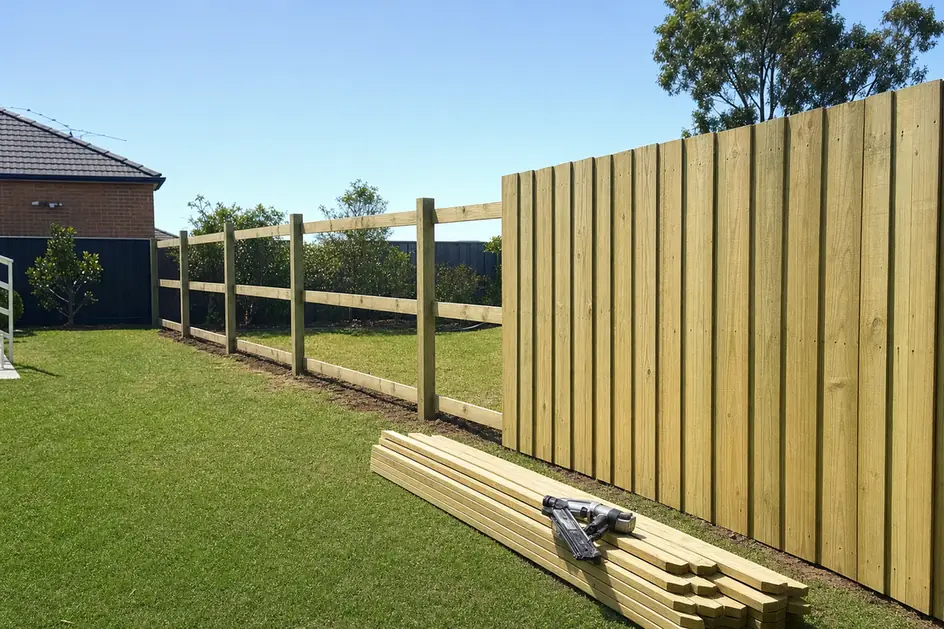
Take the old one out
We pull down the old fence and take it to the tip, unless it contains asbestos.
Set the posts
Posts go into concrete along a string line, the right distance apart for the rails.
Rails and plinth
The rails are fixed between the posts and the plinth goes along the bottom.
Palings and capping
We fix the palings on in your chosen style, add the capping if you want it, and clean up.
Timber fences beside Edgars and Darebin creeks
Since January 2026, land along Edgars Creek and Darebin Creek has a landscape overlay, a planning rule that protects how the creek land looks. A new paling fence there can need a planning permit before we build it.
Look up your block on VicPlan, the state's free property map, and tell us what it shows. A timber fence under 1.8 metres with gaps as wide as its boards, so it's at least half see-through, doesn't need that permit.
Timber fencing questions
How long does a timber fence last?
Three things decide it: whether the palings sit clear of damp soil, whether the posts are hardwood or treated pine, and how often it gets stained or oiled. A plinth takes care of the first, and a coat every few years slows the weathering.
Can I get my new timber fence stained or painted?
Yes, we can stain or paint a new timber fence. Ask for it with the quote, and say which side or both.
Do you repair old timber fences?
Yes. We replace rotten posts, broken palings and rails, and rehang sagging gates. If most of the posts have gone, a new fence is often the better buy, and we'll price both so you can compare.
Get a timber fencing quote in Epping
Timber fencing is already ticked. Add the style or estate in the notes if you know it.
- Every quote is free and in writing.
- Every job is covered by our installers' insurance.
- We stand behind our workmanship for three years.
 Colorbond fencing
 Sleeper retaining walls
 Pool fencing